What Are Real Compressed Air System Installation Costs for Auto Shops?
January 26, 2026
Why Compressed Air Costs Are Harder to Pin Down Than You Expect
For most auto repair shops, compressed air is as essential as electricity. It powers impact wrenches, tire machines, lifts, paint tools, and cleaning equipment. Yet many shop owners are caught off guard when they start pricing a full compressed air system installation instead of just an air compressor.
In Angier, NC, where shops range from small independent garages to mixed automotive and industrial facilities, compressed air system costs vary widely depending on layout, demand, and long-term usage. The real challenge isn’t finding the cheapest compressor—it’s understanding everything that goes into a system that works reliably every day.
This guide breaks down what auto shops are actually paying for, where costs come from, and how to budget realistically without overspending or undersizing your setup.
What a Compressed Air System Really Includes
Many shop owners think compressed air costs start and end with the compressor. In reality, a functional system has multiple components working together.
Core System Components
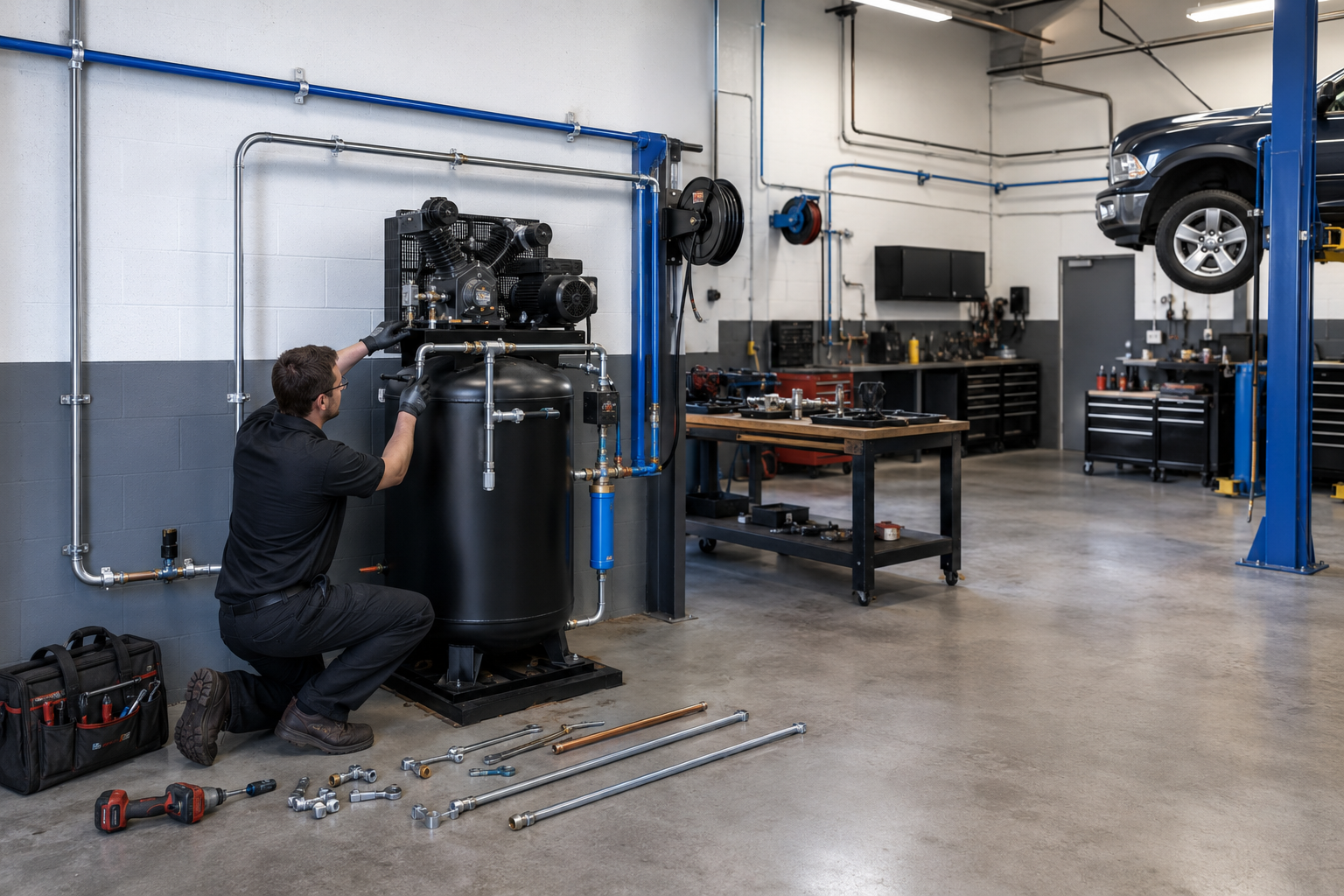
A complete compressed air system for an auto shop typically includes:
- Air compressor (rotary screw or piston)
- Air dryer for moisture control
- Filtration system
- Piping and distribution lines
- Drops, reels, and connection points
- Electrical and control setup
Each component affects performance, longevity, and overall cost.
Compressor Type and Capacity
The compressor itself is a major cost driver.
- Piston compressors
Lower upfront cost, suitable for intermittent use or smaller shops. - Rotary screw compressors
Higher initial investment, but designed for continuous operation and multiple bays.
Shops in Angier running multiple service bays or tire equipment often benefit from rotary screw systems, even though they cost more initially.
Typical Budget Ranges for Auto Shop Compressed Air Systems
Instead of one flat price, costs fall into tiers based on shop size and workload.
Small or Single-Bay Shops
These setups usually include a piston compressor and limited piping.
- Lower air demand
- Fewer drops
- Minimal expansion needs
This budget range works for light-duty repairs or specialty services.
Mid-Size Auto Repair Shops
Most independent auto shops in Angier fall into this category.
- Multiple service bays
- Tire machines and lifts
- Moderate daily air usage
These systems often include rotary screw compressors, dryers, and hard piping throughout the shop.
High-Use or Industrial-Grade Installations
Shops doing fleet work, fabrication, or continuous service require more robust systems.
- High CFM demand
- Redundant filtration
- Larger dryers and receivers
While more expensive upfront, these systems reduce downtime and protect tools long-term.
Installation Costs That Affect Your Total Budget
The system hardware is only part of the cost. Installation factors can significantly change the final number.
Piping Layout and Materials
The length and complexity of piping matters.
- Ceiling height
- Number of drops
- Material choice (aluminum, steel, or copper)
Many older buildings in Angier, NC require custom routing due to structural limitations, which increases labor costs.
Electrical and Power Requirements
Compressed air systems often need:
- Dedicated circuits
- Voltage upgrades
- Control wiring
If your shop’s electrical system wasn’t designed for modern equipment, upgrades may be necessary.
Moisture Control and Climate Considerations
Humidity plays a major role in air system performance.
Without proper dryers and filtration, moisture can:
- Damage air tools
- Cause rust in lines
- Affect paint and finishing work
Shops in North Carolina often need more robust moisture control than expected, which should be included in the budget from the start.
New vs. Pieced-Together Systems: Cost vs. Reliability
Some shop owners try to save money by assembling systems from mixed components.
When Pieced Systems Can Work
- Temporary setups
- Low air demand
- Non-critical applications
Common Problems With This Approach
- Inconsistent pressure
- Moisture issues
- Higher long-term maintenance costs
For most commercial auto shops, a properly designed system costs more upfront but saves money through efficiency and reduced downtime.
Long-Term Costs Auto Shops Often Overlook
Installation cost is only one part of ownership.
Energy Consumption
Compressors run frequently and draw significant power. An undersized or inefficient system can drive up monthly utility bills.
Maintenance and Service
Budget for:
- Filter replacements
- Dryer servicing
- Oil changes for rotary compressors
Skipping maintenance often leads to expensive repairs or early system failure.
Downtime and Lost Productivity
Air system failures shut down multiple tools at once. In a busy Angier shop, even a few hours of downtime can outweigh short-term savings.
How to Budget Smart for Your Auto Shop
Instead of asking “What’s the cheapest system?”, shop owners should consider:
- How many bays run air tools simultaneously?
- Will the shop expand in the next few years?
- Are tire services or paint work planned?
Designing a system for future growth often prevents costly upgrades later.
FAQs About Compressed Air System Installation Costs
How much does a compressed air system cost for an auto shop?
Costs vary based on compressor type, shop size, and installation complexity rather than a single flat price.
Do I need an air dryer for my shop?
Yes. Moisture control is critical for protecting tools and maintaining consistent air quality.
Can I install compressed air piping myself?
Some shops do, but improper installation can cause leaks, pressure loss, and safety issues.
How long does installation usually take?
Most systems can be installed within a few days, depending on layout and electrical work.
Is a rotary screw compressor worth the cost?
For shops with steady daily air demand, rotary systems are often more efficient and durable.
Final Thoughts on Compressed Air System Costs for Auto Shops
Compressed air system installation costs are driven by much more than the compressor itself. For auto shops in Angier, NC, factors like building layout, humidity, and long-term workload play a major role in determining the right setup.
Working with an experienced local provider like L&D Shop Solutions LLC helps ensure your compressed air system is designed correctly from day one—avoiding undersized equipment, moisture problems, and costly rework later on.
A properly planned compressed air system isn’t just an expense. It’s foundational infrastructure that keeps your shop running efficiently, safely, and profitably.