How Can You Improve Workflow With Smart Shop Layout Planning?
April 26, 2026
Workflow Problems Usually Hide in Plain Sight
Most workflow issues don’t look like problems at first. Jobs still get completed, technicians stay busy, and customers keep coming in. The inefficiencies show up quietly—in extra steps between tasks, tools that are never where they’re needed, or vehicles that have to be moved more than once to finish a single job.
Shop layout planning is about removing friction that has become normal over time. When equipment placement, bay flow, and storage zones are designed intentionally, work moves with fewer interruptions. The result isn’t just a cleaner shop—it’s measurable gains in time, safety, and consistency.
What Shop Layout Planning Actually Involves
Shop layout planning is the process of organizing space, equipment, and movement to support how work is performed from start to finish.
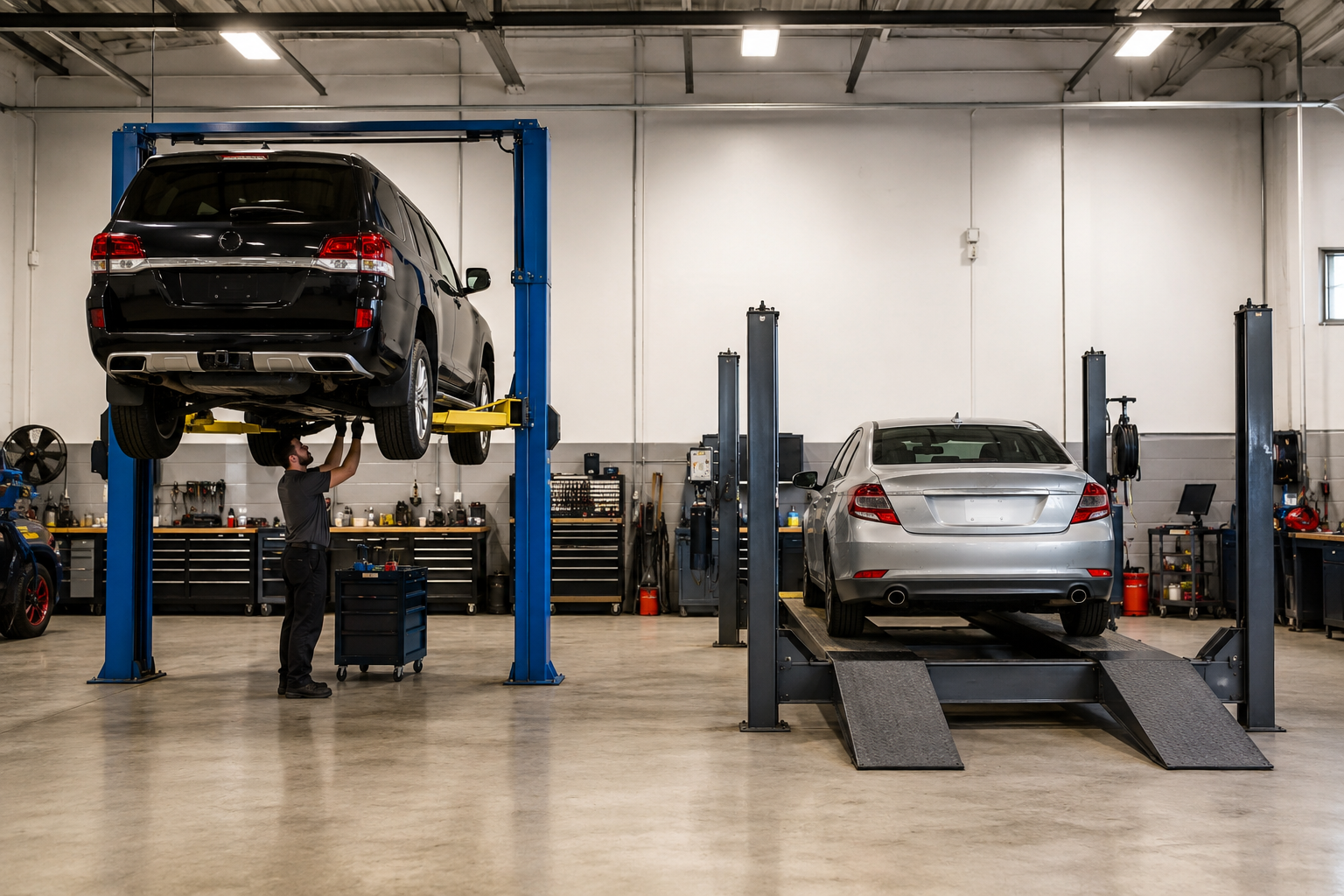
It considers how vehicles enter and exit, how technicians move between tools and bays, where equipment is staged, and how supporting systems like air, power, and storage interact with daily operations. A good layout reduces unnecessary movement and creates predictable routines that technicians can rely on.
This planning is most effective when it reflects real workflows rather than idealized diagrams.
Common Layout Issues That Disrupt Workflow
Certain layout problems consistently slow down shop operations. The following issues tend to create the most friction when left unaddressed.
- Poor bay sequencing, where vehicles must be repositioned multiple times to complete services
- Equipment congestion, causing technicians to wait or work around each other
- Inefficient storage placement, forcing repeated trips for tools or parts
- Restricted access paths, increasing safety risks and delays
Addressing these issues often produces immediate improvements without adding staff or equipment.
How Equipment Placement Influences Productivity
Equipment placement has a direct impact on how quickly and safely work gets done.
High-use equipment should be positioned close to the bays where it’s needed most. Tools that support multiple services benefit from central placement, while specialty equipment should be staged near the tasks it supports. Poor placement increases walking time, interrupts focus, and raises the risk of accidents.
Shops that re-evaluate placement based on actual usage patterns often see noticeable productivity gains without expanding square footage.
A Practical Process for Planning a Better Layout
Improving layout works best when approached as a step-by-step evaluation rather than a single redesign.
- Map the current workflow
Track how vehicles, technicians, and tools move during a typical day. - Identify repeat bottlenecks
Look for areas where work slows, queues form, or space becomes congested. - Group related tasks and equipment
Place tools and machines near the services they support most often. - Test changes before committing
Temporary adjustments help validate improvements before permanent installation.
This process keeps layout changes grounded in real operations rather than assumptions.
How Layout Planning Affects Safety and Labor Costs
Workflow and safety are closely connected.
Clear pathways reduce trip hazards and collisions. Proper spacing around lifts and equipment lowers injury risk and improves compliance. When technicians spend less time navigating obstacles, fatigue decreases and focus improves.
From a cost perspective, fewer delays and safer movement translate into better labor efficiency and lower liability exposure.
When Layout Planning Makes the Biggest Impact
Layout improvements are especially valuable during periods of change.
Shops adding new equipment, expanding services, or experiencing higher vehicle volume benefit most from revisiting layout. Facilities operating in mixed-use or older buildings often gain efficiency by adapting space to modern workflows.
In growing service areas such as Angier, NC, where shops balance efficiency with space constraints, layout planning often delivers higher returns than adding more equipment alone.
Long-Term Benefits Beyond Daily Workflow
The benefits of smart layout planning extend beyond immediate productivity.
Well-organized shops are easier to train in, simpler to scale, and more resilient to changes in staffing or service mix. Consistent workflows support quality control and help maintain service standards as volume increases.
Over time, these advantages contribute to steadier growth and better customer experiences.
Frequently Asked Questions About Shop Layout Planning
Does layout planning require a full remodel?
No. Many improvements come from repositioning equipment or adjusting workflow zones.
How often should a shop revisit its layout?
Layout should be reviewed whenever services, equipment, or volume changes significantly.
Can layout planning reduce technician fatigue?
Yes. Reducing unnecessary movement lowers physical strain and improves focus.
Is layout planning only for large shops?
No. Small and mid-size shops often see the biggest gains because space is more limited.
Should layout planning happen before buying new equipment?
Ideally, yes. Planning first helps ensure new equipment fits the workflow.
Final Thoughts on Improving Workflow Through Layout Planning
Smart shop layout planning focuses on how work actually happens, not how space looks on paper. By reducing friction, improving equipment placement, and creating predictable movement patterns, shops can increase efficiency without adding complexity.
For shops evaluating layout improvements, working with experienced professionals like
L&D Shop Solutions LLC helps align space planning with real operational needs. A well-planned layout supports safer work, smoother workflows, and long-term efficiency gains.