What’s the Difference Between Industrial vs. Residential Air Compressors?
April 5, 2026
The Difference Shows Up in Expectations, Not Just Size
At a glance, industrial and residential air compressors may look similar. Both compress air, power tools, and perform mechanical work. The real difference becomes clear when expectations change. Residential compressors are built around occasional use and convenience, while industrial compressors are built around consistency, endurance, and predictability.
Confusion often happens when garages or small shops try to bridge the gap between the two. Understanding the differences helps prevent buying a system that works on paper but struggles under real-world demand.
What Defines a Residential Air Compressor
Residential air compressors are designed for light-duty, intermittent use. Their primary goal is accessibility rather than sustained performance.
These compressors are typically smaller, easier to move, and designed to run tools for short periods before cycling off. They prioritize affordability, portability, and ease of setup. Residential units are commonly used for home projects, light automotive work, or tasks that don’t require continuous airflow.
Because they are not intended for long run times, their internal components are not built to handle constant heat or heavy cycling.
What Defines an Industrial Air Compressor
Industrial air compressors are engineered for continuous or near-continuous operation. Their purpose is to deliver stable air pressure across long work periods without interruption.
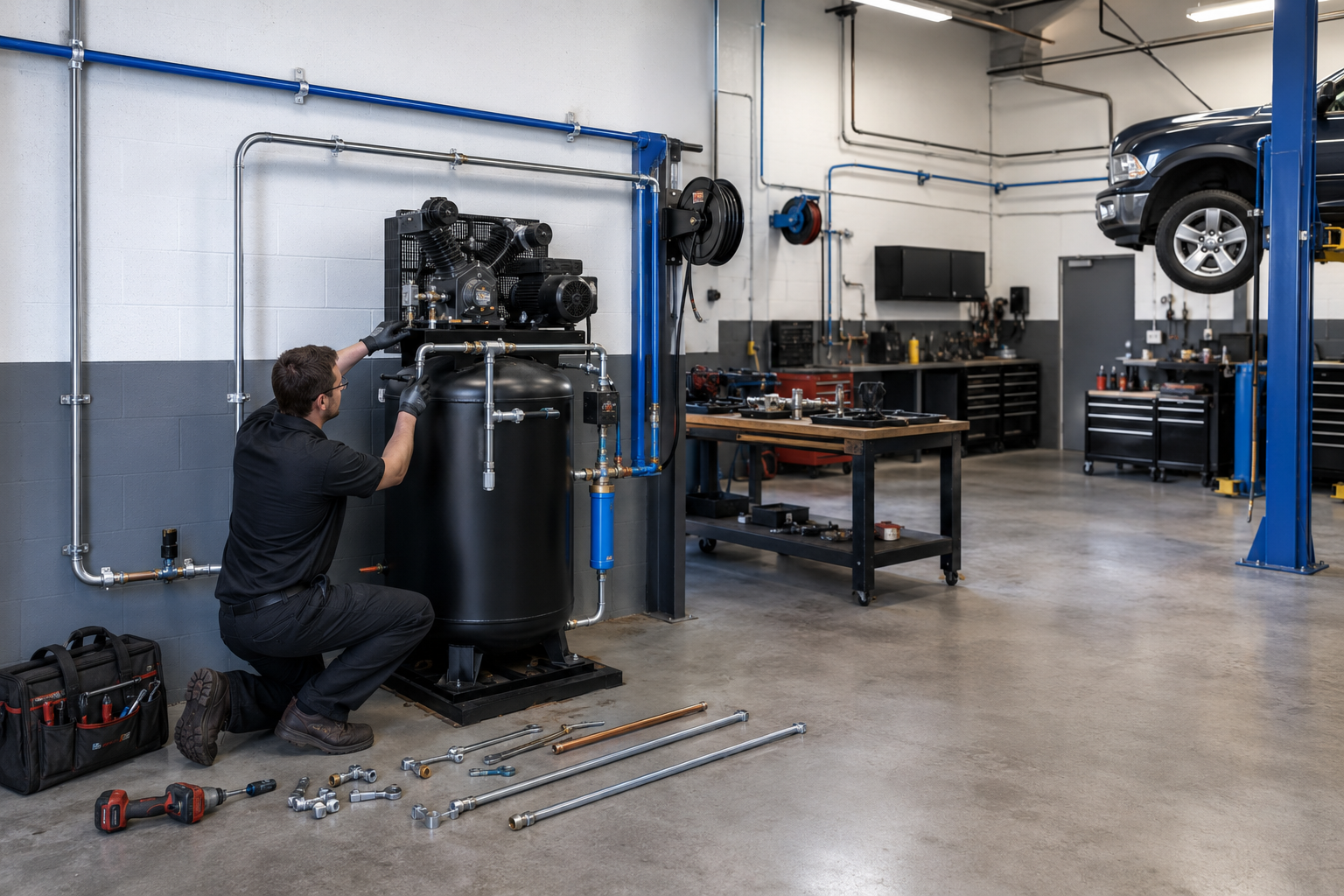
These systems are typically larger, permanently installed, and integrated into a facility’s infrastructure. They are designed to support multiple tools running simultaneously, often across several workstations. Durability, efficiency, and uptime are prioritized over portability or simplicity.
Industrial compressors are expected to perform consistently day after day with scheduled maintenance rather than frequent shutdowns.
Core Differences That Matter in Daily Use
The practical differences between residential and industrial compressors become clear when comparing how they perform under load. The following distinctions highlight why choosing the right category matters.
- Duty cycle expectations differ significantly, with residential units designed for short bursts and industrial units built for extended run times.
- Air output and pressure stability are higher in industrial compressors, supporting multiple tools without pressure drop.
- Component durability is greater in industrial systems, reducing wear under constant use.
- Installation requirements are minimal for residential units and more involved for industrial systems.
These differences affect not only performance but also long-term operating costs.
Power, Airflow, and System Capacity
Airflow capacity is one of the most important technical differences.
Residential compressors typically produce limited cubic feet per minute, which restricts how many tools can run at once. Industrial compressors are designed to deliver higher airflow consistently, allowing multiple technicians to work simultaneously without loss of performance.
Pressure stability is equally important. Fluctuating pressure may be tolerable in home use but creates inefficiencies and tool wear in commercial environments.
Maintenance and Longevity Expectations
Maintenance needs differ because usage expectations differ.
Residential compressors require basic maintenance and are often replaced rather than rebuilt when major components fail. Industrial compressors are designed with serviceability in mind, allowing components to be maintained, repaired, and optimized over time.
This difference affects long-term cost planning. Industrial systems often cost more upfront but deliver lower cost per hour of operation across their lifespan.
Where Each Type Makes Sense in Practice
Choosing the correct compressor depends on how and where it will be used.
Residential compressors are well-suited for light automotive tasks, occasional tire inflation, and hobby-level projects. Industrial compressors are appropriate for repair shops, fabrication work, and any environment where air tools are used continuously.
In mixed-use areas such as Angier, NC, some small garages start with residential units and later transition to industrial systems as demand increases. Understanding the limitations early helps avoid costly upgrades later.
Cost Differences Beyond the Price Tag
The purchase price is only part of the cost comparison.
Residential compressors are less expensive upfront and require little installation. Industrial compressors involve higher initial cost due to system size, electrical requirements, and air distribution infrastructure. However, industrial systems often reduce downtime, improve efficiency, and lower replacement frequency.
Evaluating cost based on usage rather than price alone leads to better long-term decisions.
How to Decide Which Compressor You Need
A simple decision process helps clarify the right choice.
- Evaluate how often air tools are used
Occasional use supports residential systems, while daily use points toward industrial equipment. - Count how many tools run simultaneously
Multiple tools require higher airflow and pressure stability. - Consider future growth
Expanding services or staff often requires industrial capacity. - Assess installation constraints
Space, power availability, and noise tolerance influence feasibility.
Matching the compressor to real usage prevents underperformance and overspending.
Frequently Asked Questions About Industrial and Residential Compressors
Can a residential compressor be used in a small auto shop?
It can work temporarily, but it often struggles with continuous demand and multiple tools.
Are industrial compressors louder than residential ones?
Not always. Many industrial systems are enclosed and quieter than smaller residential units under load.
Do industrial compressors use more electricity?
They consume more power overall but are often more efficient per unit of air produced.
Can a shop upgrade from residential to industrial later?
Yes, but upgrading often requires electrical and layout changes.
Which type lasts longer?
Industrial compressors are built for longer service life when properly maintained.
Final Thoughts on Choosing the Right Air Compressor
The difference between industrial and residential air compressors is not just about size or price. It’s about whether the system matches the expectations placed on it. Using a residential compressor in an industrial environment often leads to inefficiency, downtime, and premature failure.
For shops evaluating air compressor options, working with a knowledgeable provider like
L&D Shop Solutions LLC helps ensure the system selected aligns with actual workload and long-term goals. Choosing the right category from the start supports reliability, efficiency, and sustainable operation.