Are Cheap Automotive Lifts Worth the Risk to Your Shop
June 26, 2026
A quick search online turns up automotive lifts at almost every price point imaginable, and the low-end options can look awfully tempting when you are trying to keep costs down. But before you click buy on that $800 lift with no recognizable brand name, it is worth asking a harder question: what are you actually risking? For shop owners and serious garage enthusiasts in Angier, NC, understanding the real dangers of cheap automotive lifts could save both money and lives.
What Makes a Lift Cheap — and Why It Matters
Manufacturers cut costs in specific, predictable ways. Cheap lifts typically use thinner steel, lower-quality hydraulic components, and less precise manufacturing tolerances. The mechanical locks, which are the critical safety feature that keeps a vehicle from dropping while someone is working underneath it, are often the first thing that suffers in a budget design.
Additionally, many low-cost lifts imported without proper certification lack ALI (Automotive Lift Institute) certification, which is the industry standard for safety testing in the United States. An uncertified lift has not been independently verified to meet any specific safety standard. That is a significant risk for any shop in Angier, NC that values worker safety and professional liability.
The Hidden Liability of Using a Substandard Lift
If an uncertified or poorly manufactured lift fails and causes an injury, the liability consequences for a shop owner can be severe. Insurance carriers may deny claims if the equipment involved does not meet recognized safety standards. If you employ technicians, OSHA regulations require that shop equipment meet minimum safety requirements, and using a non-compliant lift could result in fines or shutdown orders.
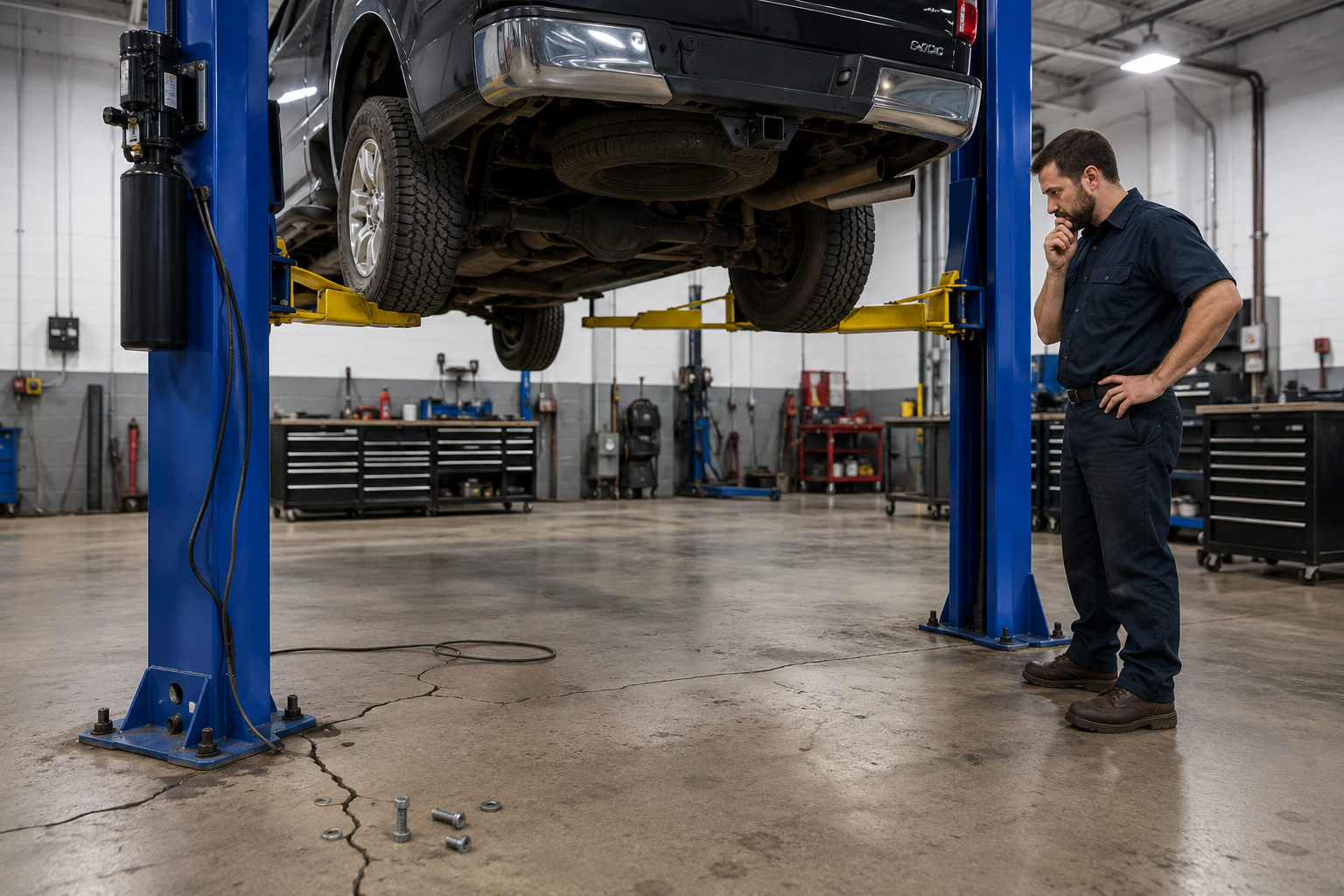
Even for home garage users in the Angier, NC area, a dropped vehicle is a life-threatening event. The false economy of saving $1,000 upfront on a cheap lift can result in costs that dwarf that savings many times over, whether from equipment damage, personal injury, or legal exposure.
What Quality Lifts Actually Provide
Premium lifts from brands like Rotary, Bendpak, and Eagle are not just more expensive for no reason. They offer concrete advantages that protect both people and vehicles. Here is what separates a quality lift from a cheap one.
- ALI certification verifying independent safety testing
- Thicker steel columns and arms engineered to rated capacity
- Dual-locking mechanical safety systems that engage automatically
- Smooth, consistent hydraulic operation that reduces vehicle movement during lifting
- Manufacturer warranties backed by real support and parts availability
How Long Do Budget Lifts Actually Last?
This is where the math really starts to work against cheap lifts. A low-cost lift may begin showing problems within 12 to 24 months of regular use: hydraulic seals fail, cables fray, and safety locks become unreliable. A quality lift from a reputable brand, properly installed and maintained, routinely lasts 15 to 20 years or longer. When you spread the cost over that lifespan, the investment in a quality unit is almost always lower per year than replacing a cheap lift every few years.
Shops in Angier, NC that have switched from budget lifts to professional-grade equipment consistently report fewer maintenance headaches, more confidence during daily operations, and significantly lower total cost of ownership over time.
Frequently Asked Questions
Is ALI certification required by law for automotive lifts?
While ALI certification is not universally mandated by federal law, many states and insurance carriers treat it as a de facto requirement. OSHA standards for general industry reference recognized safety standards, and ALI certification is widely accepted as meeting those standards.
Can a cheap lift handle the same weight as the label says?
Not necessarily. Budget lifts may be labeled with capacity ratings that reflect theoretical maximums under ideal conditions rather than real-world sustained use. Quality lifts are tested to rated capacities with safety margins built in.
What should I look for when comparing lift brands?
Look for ALI certification, steel gauge specifications, the type of locking system used, the origin of key components like hydraulic cylinders, and what the warranty covers. Reviews from working shops are also a valuable resource.
Are refurbished professional-grade lifts a good middle ground?
A refurbished lift from a reputable brand with documented service history can be a reasonable option. Have it inspected by a qualified lift technician before use and confirm that safety-critical components like locks and cables are new or in excellent condition.
How do I know if my existing lift is safe?
Annual inspections by a qualified lift technician are recommended by ALI. If you are unsure about a lift's safety status, stop using it until it has been professionally evaluated. Warning signs include uneven lifting, slow or jerky operation, and locks that do not engage with a positive click.
Conclusion
Cheap automotive lifts carry risks that go far beyond the initial purchase price. From liability exposure and safety hazards to premature failure and hidden replacement costs, the case for investing in a quality lift is compelling. L&D Shop Solutions carries top-rated lift brands including Rotary, Bendpak, and Eagle, and backs every sale with a personal 1-year warranty and professional installation. If you are evaluating your options in Angier, NC, the team at
L&D Shop Solutions is ready to help you find the right lift at the right price — without the hidden risks.